East Africa enters September with some of the year’s most rewarding wildlife viewing conditions. The long dry season has reduced vegetation and concentrated animals around permanent rivers, wetlands and waterholes across much of Kenya and Tanzania, while the forests of Rwanda and Uganda continue to offer outstanding opportunities for encounters with gorillas, chimpanzees and other primates.
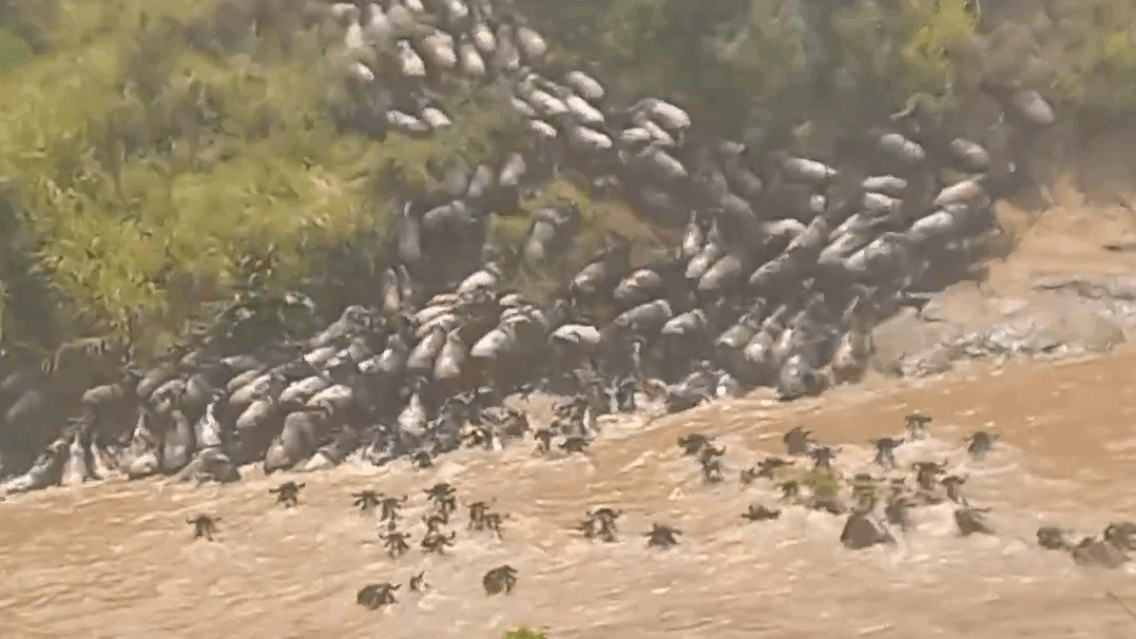
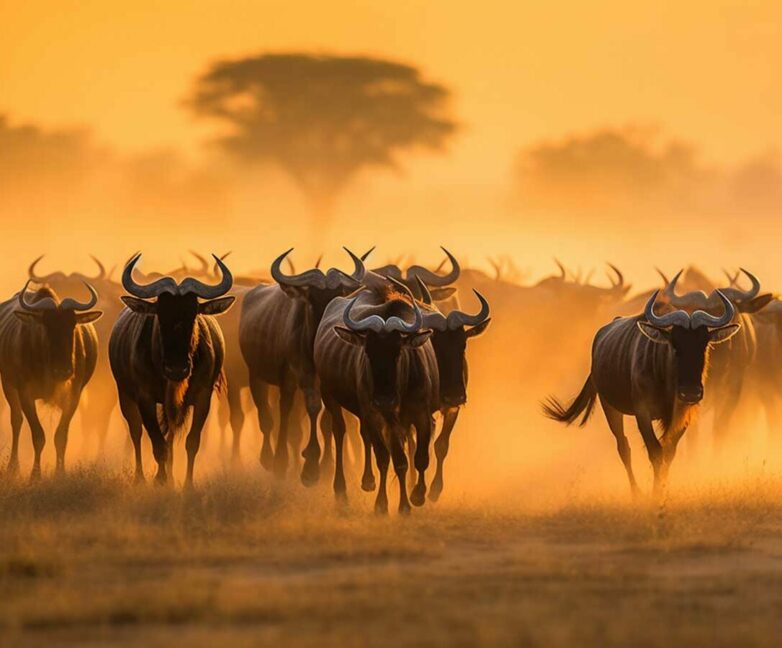
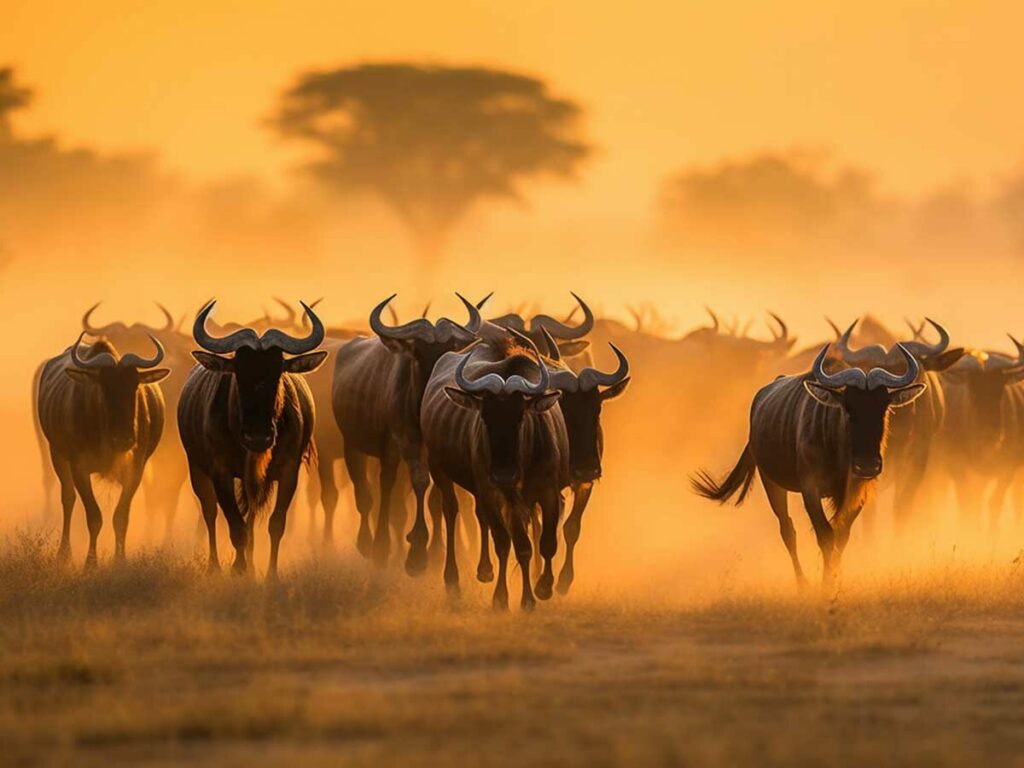
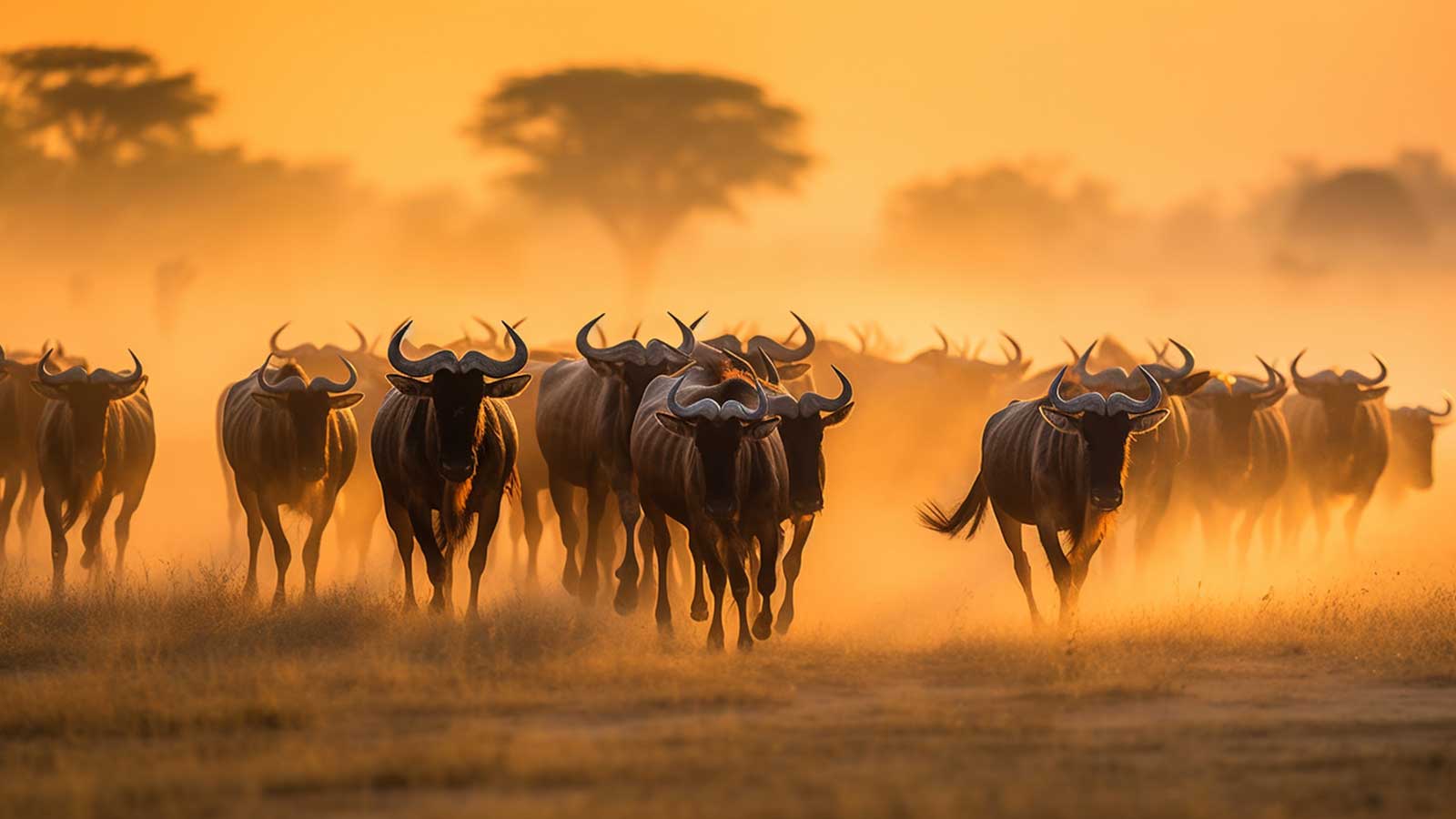
The headline remains the Great Wildebeest Migration. Recent reports confirm active Mara River crossings during August, with the herds now spread through the northern Serengeti and Masai Mara ecosystem. Elsewhere, September brings particularly productive dry-season game viewing, from the elephant herds of Amboseli and Tarangire to the rivers and waterholes of southern Tanzania.
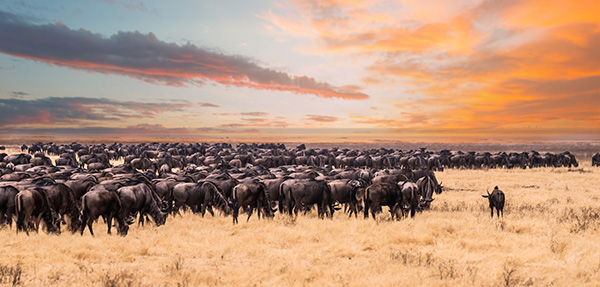
The Great Migration is firmly in its northern phase as September begins. Recent tracking reports recorded Mara River crossings on 5, 15, 20 and 21 August, with significant numbers of wildebeest still active in the northern Serengeti and around the Mara River during the latter part of the month.
This means that guests travelling now should think of the migration as occupying the wider northern Serengeti–Masai Mara ecosystem. Some herds have crossed into Kenya, while others remain in northern Tanzania, and groups may cross and re-cross the Mara River as they respond to grazing, water and local rainfall.
September normally remains an excellent month for the northern phase of the migration. Herds can be encountered on both sides of the Kenya–Tanzania border, with the Masai Mara, Mara Triangle, Lamai Wedge and Kogatende areas all potentially productive. Mara River crossings remain possible throughout the month, although neither their timing nor location can ever be guaranteed.
The concentration of wildebeest, zebra and other herbivores also creates opportunities for predator viewing. Lions, spotted hyenas, cheetahs and leopards exploit the seasonal abundance of prey, while Nile crocodiles are a conspicuous presence at the major river crossing points.
As September progresses, the distribution of the herds will depend increasingly on rainfall and available grazing. The traditional pattern eventually sees increasing numbers turn south from the Mara ecosystem towards the Serengeti, but the timing varies considerably from year to year. Guests travelling during September should therefore rely on the latest reports from guides and camps rather than a fixed migration calendar.
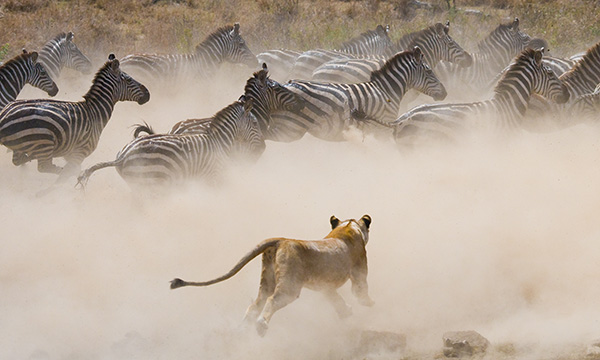
The Masai Mara remains one of the principal wildlife areas for September, with migratory wildebeest and zebra adding to an already substantial resident wildlife population. Recent August reports confirm that the Mara River crossing season is active, and further crossings and re-crossings remain possible as the herds respond to grazing conditions.
Predator viewing can be particularly rewarding during this period. Lions, cheetahs and spotted hyenas benefit from the abundance of migratory prey, while leopards remain resident around riverine woodland and suitable territories throughout the ecosystem.
The surrounding conservancies provide a useful complement to the National Reserve. Although the exact distribution of the migratory herds changes continually, the conservancies support excellent resident wildlife and generally provide a lower-density safari experience.
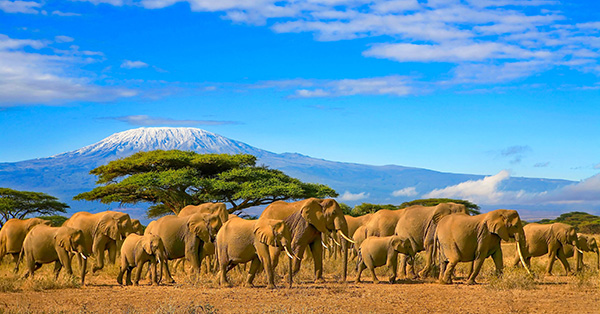
September is an excellent time for Amboseli. As the surrounding country becomes increasingly dry, the park’s permanent swamps and groundwater-fed wetlands become especially important to wildlife. Elephants remain the principal attraction, with family groups moving between feeding areas, swamps and the open plains.
Buffalo, zebra, wildebeest, giraffe and numerous antelope species can also be encountered, while lions, spotted hyenas and occasional cheetahs provide the predator element. The combination of open vegetation and animals concentrating around reliable water generally makes game easier to locate during the dry season.
Birdlife remains rewarding around the wetlands even during the dry months. Early mornings can also provide particularly good photographic conditions when Mount Kilimanjaro is clear, although views of the mountain naturally depend on local cloud cover.
Dry-season conditions make September a productive period in the vast Tsavo ecosystem. In Tsavo East, wildlife is increasingly associated with permanent water and the Galana River, with elephants often taking on the characteristic reddish colour produced by the park’s iron-rich soil.
Tsavo West offers a more wooded and topographically varied experience. Mzima Springs remains an important focal point for water-dependent wildlife, while elephants, buffalo, giraffes and a wide range of antelope occur throughout the park. The denser vegetation means sightings can require more patience than in Amboseli, but this is part of Tsavo’s distinctive wilderness character.
The Ewaso Nyiro River becomes increasingly important during the dry season, drawing wildlife from the surrounding arid country. Elephant encounters can be particularly rewarding, alongside northern Kenyan species including Grevy’s zebra, reticulated giraffe, gerenuk, beisa oryx and Somali ostrich.
Lions and leopards are resident, and the riverine woodland provides valuable cover for predators and prey alike. The contrast between the dry landscape and the greener river corridor can make September especially productive for game viewing.
Laikipia’s conservancies continue to provide varied wildlife experiences during September. The region is particularly important for rhino conservation, and selected conservancies provide some of Kenya’s strongest opportunities to encounter both black and white rhino.
Elephants, lions, leopards and wild dogs are also present across the wider ecosystem, although sightings vary considerably between individual conservancies. Laikipia’s combination of wildlife conservation and privately managed conservancies also permits activities that may not be available in national parks, depending on the property concerned.
Lake Nakuru remains particularly worthwhile for rhino viewing, with both black and white rhino protected within the park. Rothschild’s giraffe, buffalo, waterbuck, baboons and other species are also regularly encountered.
Birdlife around the lake remains an important feature, although visitors should not assume that the vast flamingo concentrations historically associated with Nakuru will be present. Flamingo numbers vary according to water levels, salinity and feeding conditions across the Rift Valley lakes.
Meru offers a quieter alternative to Kenya’s better-known safari areas. Its mixture of grassland, woodland and permanent water supports elephant, buffalo, giraffe, lion and numerous antelope species, while its rhino sanctuary provides an additional conservation highlight.
The park’s relative lack of traffic can be particularly appealing to repeat safari visitors looking for a more secluded wildlife experience.
The northern Serengeti remains the focus for migration viewing at the beginning of September. August produced confirmed Mara River crossings and the Kogatende, Mara River and Lamai areas remain important places to follow the herds.
Not every wildebeest crosses permanently into Kenya. Herds can remain in northern Tanzania or move backwards and forwards across the river as grazing conditions change. For this reason, the northern Serengeti can remain highly productive throughout September.
Beyond the migration, the Serengeti’s resident wildlife remains excellent. Lions, leopards, cheetahs, elephants, buffalo, giraffes and numerous antelope species occur across the ecosystem, so a rewarding safari does not depend upon witnessing a river crossing.
Wildlife in the Ngorongoro Crater is largely resident, making September a reliable month for game viewing. The dry season generally provides shorter vegetation and good visibility across the crater floor.
Large numbers of wildebeest, zebra, buffalo and gazelle support a substantial predator population, particularly lions and spotted hyenas. The crater also remains one of Tanzania’s most important areas for the possibility of seeing critically endangered black rhino, although sightings are never guaranteed.
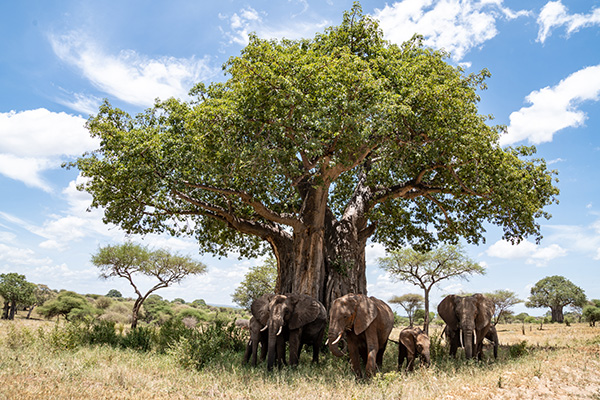
September is one of the key months in Tarangire’s wildlife calendar. As seasonal water sources disappear, the Tarangire River, Silale Swamp and other permanent water become increasingly important, drawing wildlife from a much wider dispersal area.
Large elephant families are a defining feature of the season, while buffalo, zebra, wildebeest and antelope also concentrate around water. Lions and other predators follow the prey concentrations. Tanzania National Parks identifies the river and Silale Swamp as particularly important dry-season wildlife areas.
Tarangire is also one of Tanzania’s outstanding birding destinations, with more than 500 species recorded. Its baobab-dotted landscapes and high density of elephants make it a particularly useful contrast to the open plains of the Serengeti.
Lake Manyara offers a very different habitat, combining groundwater forest, woodland, floodplain and lake shore. Elephant, giraffe, buffalo, baboon and a broad range of bird species can all be encountered.
Water levels at Lake Manyara have changed substantially over recent years, so both the extent of the shoreline and the distribution of waterbirds can vary. Flamingo numbers should therefore be treated as dependent on current feeding and water conditions rather than guaranteed.
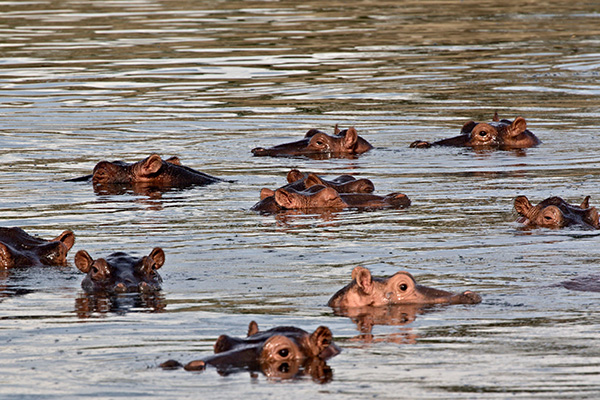
September falls within the prime dry-season wildlife period in Nyerere National Park. As temporary water sources diminish, the Rufiji River and its associated lakes and channels become increasingly important to wildlife.
Elephants, buffalo, giraffes, hippos and crocodiles are among the species associated with the river system, while lions and African wild dogs are among the park’s most sought-after predators. Nyerere’s scale means wildlife can be more dispersed than in some smaller parks, but the dry season progressively improves the chances of productive encounters around permanent water.
The Rufiji also provides a different perspective on safari. Where offered, boat safaris allow guests to observe hippos, crocodiles, waterbirds and animals approaching the riverbanks from water level, complementing conventional game drives.
September is among the strongest months for wildlife viewing in Ruaha. After several dry months, animals increasingly depend upon the Great Ruaha River and remaining pools, while thinning vegetation improves visibility.
Elephants and buffalo can gather in substantial numbers and the park supports an impressive predator community, including lions, leopards and African wild dogs. Ruaha’s relative remoteness and large area give it a distinctly different character from Tanzania’s northern circuit.
Mountain gorilla trekking remains Rwanda’s signature wildlife experience. September falls at the end of the principal June-to-September drier period, although rain is possible at any time in the montane environment.
Gorilla families are tracked daily by experienced teams, with the length and difficulty of individual treks depending upon where the gorillas are located. Wildlife encounters can never be treated as completely predictable, and visitors should be prepared for steep, uneven and occasionally muddy forest terrain.
Volcanoes National Park also provides opportunities to track golden monkeys, particularly in the park’s bamboo habitat, making them a useful addition to a gorilla-focused itinerary.
Akagera provides Rwanda’s contrasting savannah wildlife experience. Elephant, buffalo, giraffe, zebra, antelope, lion and rhino are all present, while the park’s lakes and wetlands support substantial populations of hippo, crocodile and waterbirds.
September’s generally drier conditions can improve wildlife viewing as animals make greater use of permanent water. Boat excursions provide an additional way of exploring Akagera’s wetland ecosystem.
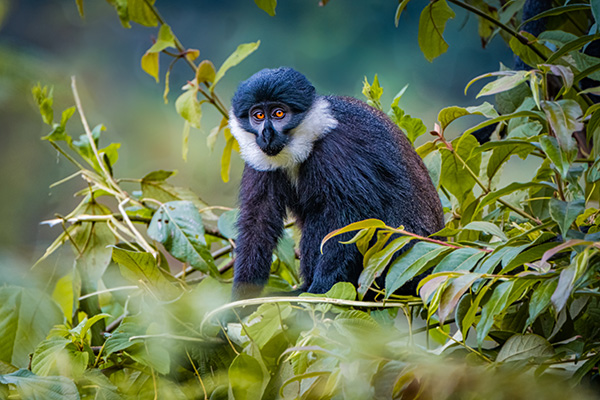
Nyungwe’s montane rainforest is one of East Africa’s most important primate habitats. Chimpanzees are the principal attraction, complemented by black-and-white colobus monkeys, L’Hoest’s monkeys, blue monkeys and other primates.
Colobus groups can be particularly impressive, while the forest’s birdlife adds another dimension for specialist visitors. Forest conditions can remain damp even during relatively dry periods, so good walking footwear remains essential.
Bwindi remains the centrepiece of many Uganda wildlife itineraries, with mountain gorilla tracking taking place in several sectors of the forest. September generally falls within the more favourable June-to-September trekking period, although Bwindi is a rainforest and showers can occur throughout the year.
The location of individual gorilla families changes daily, meaning treks can range from relatively short walks to considerably longer excursions over steep forest terrain. The forest itself is also exceptionally biodiverse, supporting numerous birds, butterflies and other primates.
Kibale is Uganda’s premier chimpanzee-tracking destination. Uganda Wildlife Authority estimates that around 1,500 chimpanzees occur in the park, alongside a notably diverse primate community.
September can provide favourable forest-tracking conditions, although rain remains possible. In addition to chimpanzees, visitors may encounter red colobus, black-and-white colobus, red-tailed monkeys and other forest species.
Queen Elizabeth National Park combines open savannah, woodland, crater lakes and wetlands, producing one of Uganda’s most varied safari experiences. Elephant, buffalo, Uganda kob and other plains wildlife occur throughout the park, while lions are an important predator.
The Ishasha sector is particularly associated with lions that sometimes rest in trees, although this behaviour cannot be guaranteed. The Kazinga Channel remains one of the park’s major wildlife features, with boat trips providing opportunities to see hippos, crocodiles, buffalo, elephants and abundant waterbirds around the shoreline.
The Nile provides the ecological focus for Uganda’s largest national park. Game drives north of the river can produce giraffe, elephant, buffalo, hartebeest, Uganda kob and predators including lion and, with considerably more luck, leopard.
Boat trips on the Nile complement terrestrial game viewing, with hippos, Nile crocodiles and extensive birdlife along the river. The wider Murchison ecosystem is also an important area for birders seeking species such as the distinctive shoebill.
Mgahinga provides an alternative mountain gorilla experience in the Virunga landscape and also protects important habitat for golden monkeys. Its bamboo forests and volcanic scenery create a markedly different setting from Bwindi.
For clients particularly interested in primates, combining mountain gorillas with golden monkey tracking can provide a broader understanding of the Albertine Rift’s exceptional biodiversity.
September is an especially rewarding month for combining several of East Africa’s contrasting wildlife experiences. In the Serengeti–Mara ecosystem, attention remains focused on the Great Migration and the possibility of further Mara River crossings. In Amboseli, Tarangire, Ruaha and Nyerere, increasingly dry conditions concentrate animals around permanent water, often improving visibility and the frequency of encounters.
In Rwanda and Uganda, the emphasis changes from open-country game viewing to primates and forest wildlife. Mountain gorillas, chimpanzees, golden monkeys and colobus monkeys provide an entirely different safari experience, while both countries add outstanding birding opportunities.
Wildlife movements are never completely predictable. Rainfall, water availability and grazing conditions can alter the location of animals quickly, particularly during the Great Migration. ARP Africa Travel therefore recommends treating seasonal patterns as a guide and using the latest reports from our teams, guides, camps and lodges when planning wildlife-focused itineraries.